What If Your Organizational Turnover Problem Is Actually an Employee Health Problem?
Two weeks ago, I wrote about why great people stay. Last week, I asked what happens when we confuse survival with leadership, and why that matters for individual and organizational health.
This week, I want to connect those two conversations, because if organizations want great people to stay, they have to pay attention to what happens to those people while they're still there.
What if your turnover problem is actually an employee health problem?
Organizations and employers spend a tremendous amount of time teaching people what to do. They teach communication, delegation, conflict management, coaching, feedback, emotional intelligence, strategic thinking, and the skills required to lead a team effectively. Those skills matter, but what happens when the person being developed is struggling to function at their best before they even walk into the workplace?
Consider the employee who drags themselves out of bed after another night of poor sleep, changes clothes three times because nothing fits the way it used to after slowly gaining weight, skips breakfast because they're rushing into the first meeting of the day, and spends the morning running on coffee and adrenaline. By 2 p.m., their brain feels foggy, their patience is wearing thin, their confidence has taken a hit, and they're struggling to find the words they normally have no problem saying. Then comes the presentation they've been preparing for all week. They're expected to think strategically, communicate clearly, answer difficult questions, and lead the room with confidence.
They know how to do all of those things, but their capacity to do them well has been compromised. That individual problem doesn't just stay individual.
It shows up in the meeting, in decision-making, in communication with the team, and in how that leader responds when something goes wrong. A weaker presentation can mean losing a client or a contract. A poor decision made under pressure can create an expensive problem for someone else to fix. A leader who can't communicate clearly can leave an entire team working in the wrong direction. A leader who is constantly depleted can make it harder for good employees to stay engaged and see a future with the organization.
These aren't just theoretical costs. Gallup's current workplace research found that employees who are mentally and physically healthy miss 53% fewer days because of health problems and are 32% less likely to be actively seeking another job.
This is the part of leadership development I think we're missing.
We talk about developing the leader's skills, but rarely talk about developing the human being who has to carry those skills into the real world.
That human being doesn't stop existing when they leave the office. People go home to children, spouses, aging parents, relationships, financial responsibilities, hobbies, communities, and all the other things that make up a life. They sleep, eat, exercise, recover, manage stress, and try to find some sense of fulfillment outside of their job. All of it comes with them when they walk through the door the next morning.
You can't separate the employee from the human being.
I've coached people who were successful on paper but were barely functioning in real life. They lived to work, continued showing up, while their health, confidence, relationships, and quality of life were suffering. Their careers might have looked successful from the outside, but they had very little capacity left to show up at work effectively and very little capacity left to enjoy the life they were working so hard to build.
That's not whole-person performance.
If organizations want to develop the whole leader, they have to start by looking at the whole person, not just the person they see during the workday.
That doesn't mean an employer becomes responsible for managing someone's personal life. It means caring about the person behind the performance enough to notice when something isn't right and making sure qualified resources are available when that person needs support.
Sometimes that begins with a leader genuinely asking, "How are you doing?" and being willing to actually listen to the answer.
The goal isn't for a manager to diagnose the problem or fix someone's life, it's to create enough trust and access to resources that a person doesn't have to struggle alone until their health, performance, or career reaches a breaking point.
That might mean access to health coaching, mental health resources, financial support, physical health resources, leadership coaching, or other services that address the factors influencing how people show up at work.
The goal isn't to create employees who are simply more productive for 40 hours a week. The goal is to create people who are healthy enough to perform well at work and fulfilled enough to have a life worth coming home to.
When people are healthier and have greater capacity, they are better equipped to think clearly, make sound decisions, communicate effectively, manage pressure, and stay engaged in the work. For the organization, that can mean fewer missed days, less unwanted turnover, stronger retention, better execution, and less money spent replacing people who should have been able to stay and grow.
This is especially important when you're talking about leaders. If replacing a leader or manager can cost an organization roughly twice their annual salary, then retaining and developing capable leaders isn't simply an employee benefit. It's a business strategy.
So the question becomes:
How do we support the whole person so they can lead well consistently?
That's the conversation I'm committed to bringing into organizations.
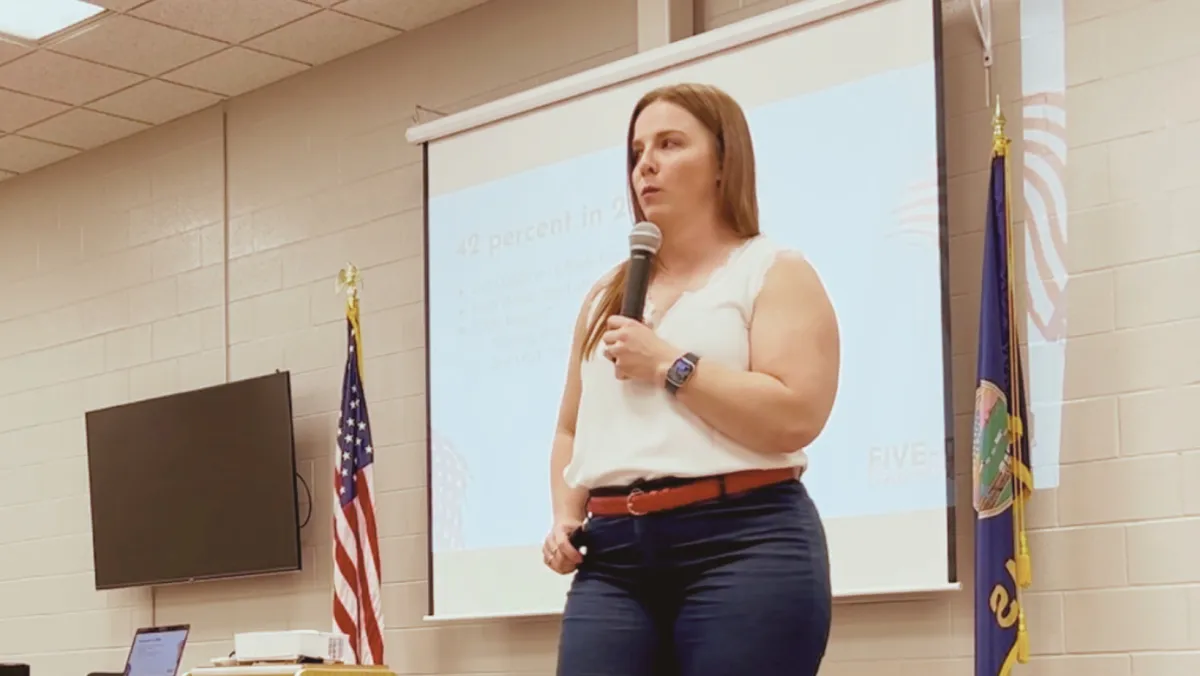
Through keynote presentations, leadership workshops, consulting, and coaching, I help organizations address the human performance factors that influence how their people show up, perform, and lead, so organizations can better support the people behind the work while improving retention and productivity, reducing the costs of turnover and absenteeism, improving the health and well-being of their employees, and creating the capacity to scale revenue and impact.
💭 How can you better invest in your people so they can, in turn, invest more of themselves in your organization?
My leadership philosophy is simple:
Leadership starts with leading the person in the mirror first.
Healthy leaders build healthy organizations.
Leadership capacity drives individual and organizational performance.
If this is a conversation you'd like to bring to your organization, I'd love to be part of it. You can learn more about my speaking, workshops, and my book,"Stand Tall & Take No Sh*t," at www.five0fierceandfit.com.
Leadership doesn't stop with one conversation.
Every week I share practical insights on human performance, leadership, and health to help high performers build success without sacrificing their health. If you'd like these lessons delivered straight to your inbox, you can join us >>HERE<<